
Workers’ Comp for Businesses in Texas


PROTECTION STARTS HERE
Is workers’ comp required in Texas?
Workers’ compensation is not required for most private employers in Texas. However, Texas does require coverage for public employers like school districts and for contractors working on government projects.
Even though it’s not required, workers’ compensation is still a good idea. It protects employees after workplace injuries and shields employers from major financial exposure. Without coverage, an injured employee can sue you for damages—whether or not your state requires you to carry workers’ comp.
NEED-TO-KNOW
Where workers’ comp steps in—and where it can’t
Workers’ comp is here to protect your team when something goes wrong on the job—but it doesn’t cover every situation. Here’s a simple breakdown so you know exactly where your policy has your back, and where it doesn’t.
What’s covered
- Work-related injuries and illnesses
- Medical treatment
- Lost wages
- Disability benefits
- Job retraining
- Death benefits
What’s not covered
- Injuries that happen outside of work
- Self-inflicted injuries
- Incidents involving alcohol or illegal drugs
- Stress or emotional claims
- Independent contractors
- Injuries from commuting to and from work
don't risk it
Risks of operating without workers’ comp in Texas
Running a business without workers’ comp in Texas can bring serious consequences. Here’s what can happen if you’re uninsured:

Personal liability
Without insurance, injured employees can sue you for lost wages, medical bills, and pain and suffering.

High litigation costs
As a non-insured employer, you may face higher legal fees, exposing you to further financial losses.

Business disruption
Covering the cost of damages and litigation can disrupt your cash flow and business operations.
Personal liability
Without insurance, injured employees can sue you for lost wages, medical bills, and pain and suffering.
High litigation costs
As a non-insured employer, you may face higher legal fees, exposing you to further financial losses.
Business disruption
Covering the cost of damages and litigation can disrupt your cash flow and business operations.
PROTECTION STARTS HERE
Who pays for worker’s comp benefits?
In Texas, employers are the ones who pay for workers’ compensation benefits. Employees never pay for this coverage, nor can the cost be deducted from their paychecks.
The price of a workers’ comp policy is determined by several factors, including:

Payroll size
Premiums are partly based on your total payroll—the higher it is, the higher the potential exposure.
Number of employees
Having more employees increases the chances of workplace injuries, which impacts the cost of your policy.
Location
Texas rates vary by area, so where your business operates influences your workers’ comp pricing.
Industry
Some industries are riskier than others; higher-risk work leads to higher premiums.
YOUR TEAM, COVERED
Should every employee be on my workers’ comp policy?
While not required in Texas, it’s a good idea for all your employees to be covered under your workers’ comp policy, including full-time, part-time, seasonal, and temporary workers. However, business owners may not need coverage for themselves. Depending on how your business is structured, you may choose to include yourself or opt out.
LEGAL BASICS
When is a workers’ comp lawyer needed for a business?
Clarifying how lawyers fit into the workers’ comp process for Texas businesses.
In most cases, a business does not need to hire a workers’ comp lawyer when an employee is injured. Workers’ comp insurance is set up so the insurance carrier manages the entire claim on behalf of the employer—coordinating medical treatment, paying benefits, handling disputes, and even providing attorneys if the case becomes complicated. For most injuries, the insurer takes care of every legal and administrative step.
A lawyer may only become relevant for a business in specific situations, such as operating without required coverage, facing state penalties, responding to a fraud investigation, or dealing with issues outside the normal claim process. These cases are much less common but may require legal support beyond what the insurance carrier provides.
For typical workers’ comp claims—whether minor or more serious—the insurance carrier handles it all. Most employers never need to hire their own lawyer because the system is designed for the insurer to take on the legal responsibilities while the business stays focused on supporting the employee and staying compliant.
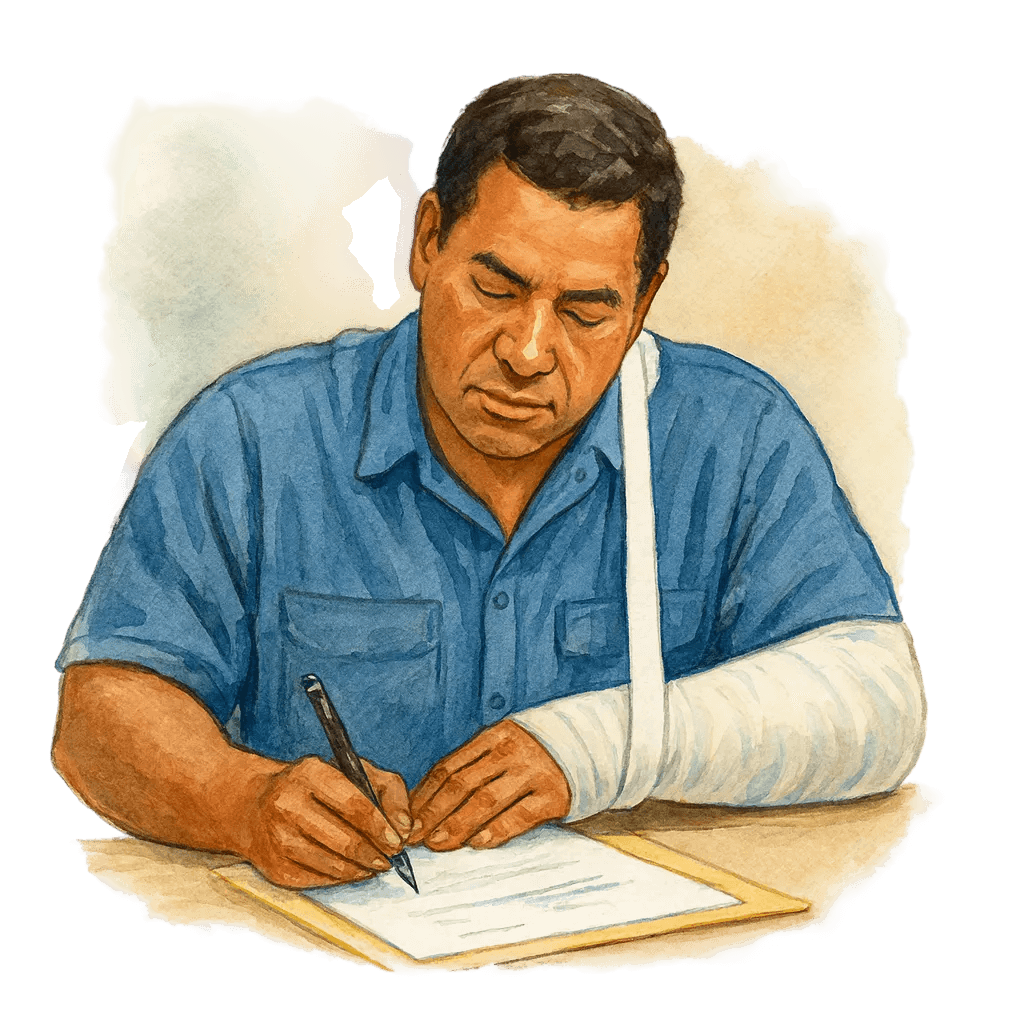
What are workers’ comp settlements?
A settlement is an agreement to close a workers’ comp claim for a set amount. In Texas, employees can settle their claims, and while the insurer handles it, settlements can affect the business claims history and future premiums.
Settlements can be:
Lump sum
The worker receives a one-time lump-sum payment, the claim fully closes, and workers’ comp is no longer responsible for any future medical treatment.
Structured
Both sides agree on the worker’s disability and future care, and workers’ comp pays a set amount in installments over a period of time.
Workers’ comp for your Texas business—made simple with Hugh

Hugh’s Texas License: 3493962